Issues running without Encoder Motor installed?

SaabScott

Member
Joined
Jul 11, 2013
Posts
81
As the title suggests, I'm wondering if removing the encoder motor and running without creates any issues.

I replaced mine last year with a Dorman part from RockAuto. It worked until recently and as soon as it started acting up, I removed it.

My concern is, how long can I go before I "have" to replace it? I certainly will before winter, but is it safe to run for several months without it?
 
I would put it back but with the connector unplugged, unless you have a warranty and are going to exchange it. You don't have the 4WD motor with the brake, but the planetary gear train friction should keep the transfer case control shaft from rotating. It also might not rotate on its own, but I think that's the only thing I'd worry about - too much TC clutch engagement from inadvertent shaft rotation.

Did you get crowhopping or some other behavior that turned on the Service AWD lamp from the bad motor?
 
The AWD system starting acting like it was when I bought it (except moreso). a lot of "crowhopping" (who came up with that term and what does it mean (other than what the truck was doing)?).

Since it was purchased from Rock Auto, and the Dorman part has warranty, RA will handle replacement (just exchanging e-mails with them now).

I had originally been thinking that I would have to buy a new one ... and wanted to put that off as long as possible.
Since they will replace it under warranty, I will ship it back to them ASAP and have it replaced as soon as the new one arrives.

For anyone that needs to replace the encoder motor, I was able to remove it in my driveway ... it really is one of the easier fixes!
 
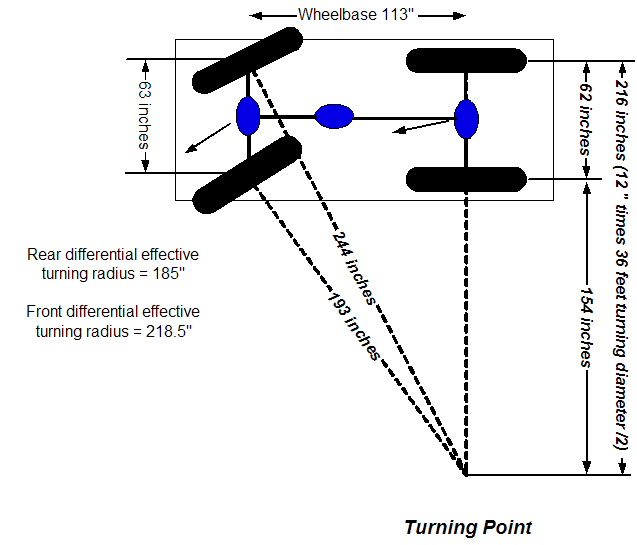
Crowhopping is an old offroaders term for the driveline binding you get in 4WD mode when the front and back driveshafts are tied together by too much torque in the transfer case. When you try to turn under those conditions, the front diff is trying to turn with a different radius than the rear, because the center of the turn is in line with the rear axle and farther away from the front. This is the 4 wheel equivalent of trying to turn an axle without a differential in the middle. The stress builds up and up and if you're on dry pavement, it may stop you from moving at all. On sand or snow, the stress will eventually break a tire loose with a hop/skid/bump/shudder.

People liken this to the way a crow "walks" by hopping both feet at a time.

Done too much, you can break a CV joint or transfer case internals.

Vehicles with true AWD modes usually have a viscous clutch transfer case that can't lock up fore/aft and don't have these issues. It was only this platform that cheaped out and used a dumbed-down NP126 transfer case as a fakey-fake AWD mode which was really the A4WD NP226 transfer case without a low range. The SS uses a non-electronic Torsen transfer case (actually works like a limited slip differential) with instant and smooth torque transfer.

I drew this up 8 years ago to explain why:

envoyturning.jpg
 
  • Like
Reactions: BlazingTrails
Thanks Roadie ... definitely more information that I dared hope for. ;-)

I grasped the concept of crowhopping (having lived through it) ... didn't know why it didn't happen on other AWD/4WD vehicles though. Thanks for the explanation.

I've run into a slight snag with Rock Auto / Dorman ... apparently to exchange the part and have them send out a replacement (after receiving the defective one) at no charge, I need to have kept the original packaging.
Looks like I may have to purchase a replacement and send the defective unit back in the new packaging for a credit. Either way, still much better than having to fork out the dough.


Your detailed answer leads me to a question I have had on my mind for some time ...

http://www.saabcentral.com/~viscouse/2006-97X/2006_9-7X_brochure_index.htm

The marketing literature for the 9-7X describes the drivetrain as an AWD system, delivering 100% pof the power to the rear from launch to 20mph, 85% of the power to the rear above 20mph, and as much as 95% of the power to the FRONT wheels in slippery conditions.

Comments I have seen in this forum suggest their marketing spin is taking some liberties and the AWD system is not nearly that advanced.

Which is true?

9-7X_06.jpg
 
SaabScott said:
Thanks Roadie ... definitely more information that I dared hope for. ;-)

I grasped the concept of crowhopping (having lived through it) ... didn't know why it didn't happen on other AWD/4WD vehicles though. Thanks for the explanation.

I've run into a slight snag with Rock Auto / Dorman ... apparently to exchange the part and have them send out a replacement (after receiving the defective one) at no charge, I need to have kept the original packaging.
Looks like I may have to purchase a replacement and send the defective unit back in the new packaging for a credit. Either way, still much better than having to fork out the dough.


Your detailed answer leads me to a question I have had on my mind for some time ...

http://www.saabcentral.com/~viscouse/2006-97X/2006_9-7X_brochure_index.htm

The marketing literature for the 9-7X describes the drivetrain as an AWD system, delivering 100% pof the power to the rear from launch to 20mph, 85% of the power to the rear above 20mph, and as much as 95% of the power to the FRONT wheels in slippery conditions.

Comments I have seen in this forum suggest their marketing spin is taking some liberties and the AWD system is not nearly that advanced.

Which is true?
This is my opinion and based on moderate knowledge.
The system is probably capable of being programmed to do what is printed in the Brochure, but simply put, It monitors rear wheel spin and adds front drive as needed to reduce rear wheel spin. The system self adjusts for wear so it can, with some accuracy send a varying percentage of power to the front wheels. The system is mechanically and electrically identical to the system that the Bravada and Ranier used. Although different TCCM programming could change some operating parameters based on the brand of the Vehicle.

We've all read hype in Brochures and probably some of that information is just that, Overall, It is a capable "Automatic 4WD" system, not AWD in my book.
 
I totally agree with that assessment. If there's no viscous coupling with instantaneous action in the transfer case, I would not allow them to call it a true AWD system. If I was King of the World, that is.

And the 50K fluid change interval in the TC is just an admission that they blew the design. That odd requirement is costing a LOT of owners a LOT of money as time goes on and the vehicles age.
 
OK, so let me see if I understand the gist of what you are saying ...

We start with 100% RWD. The rear wheels are also controlled by a LSD. Therefore if one slips, power can be shifted to the other.
Then, if there is slip in the rear, power can also be shifted (between 0% and 85%??? is it in steps or varying percentages?) to the front wheels. But, there is no LSD in the front, therefore the power is split 50/50 to the front wheels.

If there is slip in the front, it will then shift to the rear where the LSD will also impact (positively I hope) traction.


But, does it REALLY run 85/15 above 20mph in dry conditions?


And is it because there is no shift of power between the front wheels that makes you say this is 4WD vs. AWD?

I'm not debating any of the comments, just truly trying to understand.

I've only had it for just over a year and put about 45K kms (28K miles) on it so far. Overall, I am extremely happy with it and everything about it.
 
SaabScott said:
OK, so let me see if I understand the gist of what you are saying ...

We start with 100% RWD. The rear wheels are also controlled by a LSD. Therefore if one slips, power can be shifted to the other.
Then, if there is slip in the rear, power can also be shifted (between 0% and 85%??? is it in steps or varying percentages?) to the front wheels. But, there is no LSD in the front, therefore the power is split 50/50 to the front wheels.
ANS-As the rear slips the front will engage, the LSD reaction will usually result in both rears slipping or the A4WD will disengage because the slippage has stopped. The front engagement would be in "steps", but possibly too small and too fast to be perceived as the system applies and releases at the millisecond level to "check" if slipping is still occurring. The power going to the front will split as you state, but the front is usually heavier and front wheel spin will be more difficult as the front and rear are splitting the available torque.

If there is slip in the front, it will then shift to the rear where the LSD will also impact (positively I hope) traction.
ANS-If there is slip in the front (probably on glare ice), then your acceleration will be limited to the available friction between all of the tires and road surface. Some of the torque will always shift to the front as long as rear wheel spin is occurring.


But, does it REALLY run 85/15 above 20mph in dry conditions?
ANS- It will engage as programmed into the TCCM, But I doubt the system will hold a 15% engagement (not impossible) as this requires the Actuator stay partially energized the entire time. The actuator is powered to connect the front and spring loaded to return when power is removed. There is a minimum % of friction applied to the clutch all the time from a wave spring.


And is it because there is no shift of power between the front wheels that makes you say this is 4WD vs. AWD?
ANS-No, IMHO, AWD has a viscous connection between front and rear as Roadie stated and A4WD automatically changes between 2WD and 4WD as needed. In the 4WD mode front and rear are locked together, In other words, with the A4WD you must slip before system reacts.

I'm not debating any of the comments, just truly trying to understand.

I've only had it for just over a year and put about 45K kms (28K miles) on it so far. Overall, I am extremely happy with it and everything about it.
The above comments are based on my scattered research of the system, This system originated in 1998 for the Bravada and Astro/Safari. It has been modified over the years and my "facts" probably apply to some generation of the system as I've read about it over the years. The Auto Clutch portion of the TC was incorporated into the Electronic 4WD TC used in many GM trucks since 98 also. (Those with a A4WD selection).
 
I think the 95% to the front is a hob-knob marketing grab. At full clutch engagement the torque distribution would be 50/50, and there is no clutch or other method for removing the rear from the equation at any point. If the rear driveshaft were removed, sure you could put 95% to the front - 100% in, subtract some frictional and other losses, and nowhere else to go BUT the front!
 

Forum Statistics

Threads
24,262
Posts
648,525
Members
20,706
Latest member
tfinc

Members Online